
Case Study
Building Future‑Ready Learning with Chromebooks and Google Workspace at Rainbow Education MAT
Estimated Read Time: 5 minutes

Client: Rainbow Education Multi Academy Trust
Partners: Computeam as a Google Professional Development Partner, Google for Education, ACER (hardware and funding partner), Computeam’s Learning Locker
Project Start/Finish: June 2025 to July 2026, covering the full 2025–26 academic year
Rainbow Education Multi Academy Trust (REMAT) is a forward-looking primary MAT in Merseyside, focused on raising educational standards and equity across its constituent schools.
Before the 2025–26 academic year, schools within the Trust displayed varied levels of digital maturity, with no Google Reference Schools in the region. Recognising technology's role in levelling opportunities and broadening accessibility, REMAT sought to align its digital vision with both its School Improvement Plan and the DfE Digital and Technology Standards.
The Trust wanted to modernise classroom practice, establish a consistent 1:1 Chromebook model beginning with Year 6, and embed Google Workspace for Education as the central platform for teaching, learning and communication. The leadership aimed to narrow attainment gaps for SEND and EAL learners, enable data-driven feedback practices and meaningfully reduce teacher workload through automation and digital efficiency. The first-year pilot represented a significant step toward developing a digitally confident, future-focused learning culture across all schools.

The Challenge
How can a primary multi-academy trust with varying levels of digital maturity harness cloud technology, automation and AI to reduce teacher workload, enhance accessibility for SEND and EAL learners and improve pupil engagement, without creating additional complexity?
The trust needed solutions that were:
Unified and scalable – enabling all eight schools to operate under a single, consistent digital platform for teaching, assessment, and collaboration across the Trust.
Workload-conscious – reducing the number of applications and logins teachers managed, while streamlining marking and feedback processes through smart automation.
Inclusive and accessible – embedding built-in accessibility tools to improve learning support for SEND and EAL pupils, ensuring equitable participation for all learners.
Pedagogically aligned – linking every digital tool and workflow to evidence-based teaching practice rather than adopting technology for its own sake.
Compliant and future-ready – meeting DfE Digital and Technology Standards, safeguarding requirements, and preparing schools for future accreditation such as Google Reference School status.
Sustainable and staff-led – supporting educators through professional development and internal capacity building so that digital improvements could continue beyond the pilot.
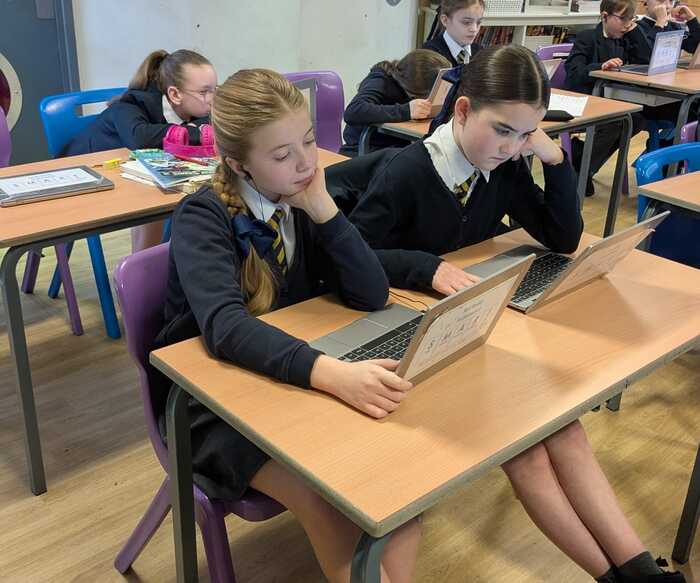
Before Computeam’s involvement, access to technology and consistency were limited across REMAT schools. Year 6 pupils relied primarily on shared tablets without physical keyboards, which hindered their ability to write extensively, research independently or collaborate effectively online. Teachers faced “software fatigue,” as each school employed an average of over seven different educational applications, resulting in fragmented workflows and duplicated work.
Pupils struggled with multiple login systems, while teachers found it difficult to track submissions and feedback coherently. Baseline audits revealed a significant accessibility skills gap: none of the surveyed staff had received formal training in built-in ChromeOS accessibility tools such as Text-to-Speech or Dictation. Confidence in supporting SEND and EAL learners stood at only five out of ten on average.
Meanwhile, feedback and assessment followed traditional patterns; almost 90% of Year 6 teachers spent three or more hours weekly on manual marking, with a third spending over five hours. Regular AI-enabled feedback or moderation was practically non-existent. Many teachers used Google Classroom only during pandemic remote learning and have since reverted to manual workflows, relying on informal communication for collaboration.
The Trust recognised an urgent need for a unified, scalable platform and professional development roadmap to enable consistency, collaboration and inclusion.

The Solution
Computeam implemented a comprehensive PedTech solution built on modern cloud technology, professional learning and sustainability principles. The team led the deployment of ACER Chromebooks for every Year 6 pupil across all schools, integrating each device with Google Admin Console and enabling Google Single Sign-On (SSO) for unified access.
To ensure long-term success, Computeam delivered a structured CPD programme spanning the academic year. This included a digital skills audit, hands-on staff workshops, in-class team-teaching sessions with pupils and live webinars focused on pedagogy-driven technology use.
The project streamlined REMAT’s digital ecosystem by consolidating core teaching tools into Google Workspace for Education, centred on Google Classroom, Drive, and Gemini and phasing out redundant applications such as Seesaw and Showbie.
To address workload challenges, Computeam delivered specialist modules on Google Classroom, Practice Sets, Read Along integration, and AI-driven feedback marking. Accessibility sessions introduced ChromeOS features like Select-to-Speak, Dictation and Reading Mode, ensuring inclusivity for all learners. For consistency and autonomy, a peer-led video recording from Croxteth Primary showcased best practice in 1:1 Chromebook classrooms, later shared across the Trust via Computeam’s Learning Locker for asynchronous CPD.
The approach provided staff with practical tools while anchoring digital adoption in meaningful pedagogy and accessibility principles.

The Result
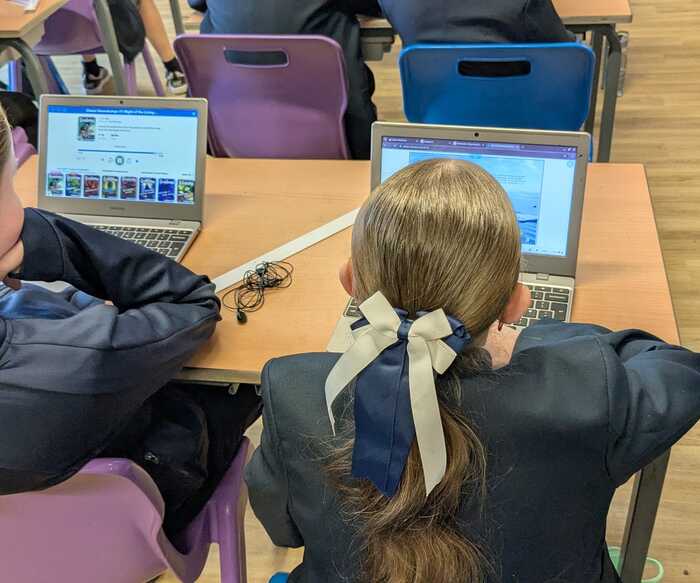
By the end of the pilot year, all schools fully integrated 1:1 Chromebooks in Year 6. Daily Chromebook use rose from zero to 100%, while every classroom adopted Google Classroom as its central learning hub. Around half of the teaching staff used it for daily lesson delivery, and all others for weekly assignments and communication.
Teacher confidence in using Chromebooks grew by 90%, and self-assessed confidence with Google Classroom improved by more than 120%. Familiarity with Google Gemini AI surged from 5% to 60%, and confidence in meeting DfE and Ofsted AI safety expectations rose to 90%.
The rationalisation of multiple tools reduced duplication, cutting the average number of applications per teacher from 7.1 to just 4. Every staff member completed Computeam’s accessibility training, and confidence in supporting SEND and EAL learners increased from 5/10 to 8.5/10.
100% of teachers were actively using accessibility tools such as Select-to-Speak and Dictation. Digital marking became the new norm, used by all teachers, while handwritten feedback decreased substantially, saving hours each week.
Collaboration across the Trust strengthened markedly, with 95% of teams using Google Shared Drives for shared planning. The project’s training earned an exceptional Net Promoter Score of +75, and participant endorsements highlighted the practical utility of integrated translation, feedback and accessibility features within Google Classroom. The measurable increase in confidence, collaboration and workload efficiency evidenced REMAT’s successful transition into a digitally cohesive, accessible and future-ready Trust.

Client Statement
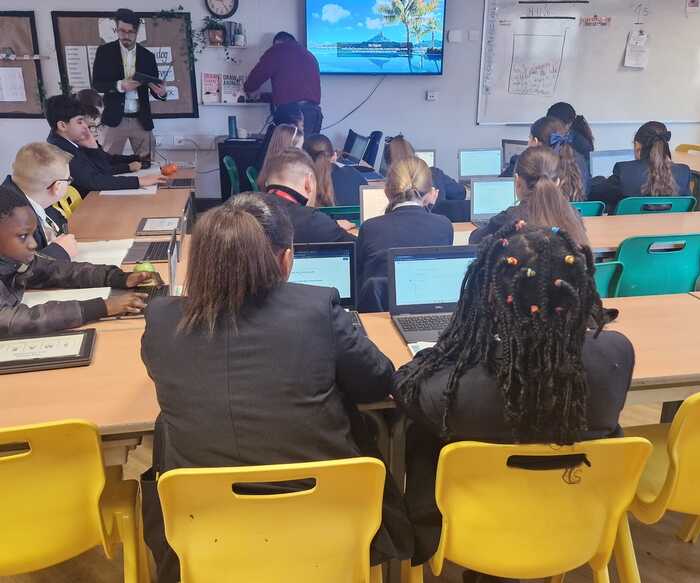
"The 1:1 Chromebook project is enhancing and supporting staff pedagogy. We work from a pedagogical blueprint, a key part of which is modelling and assessment. The Chromebooks allow children to complete their work while enabling staff to assess every child in real time. They do not remove the need or desire for teachers to circulate around the room and maintain direct" communication.
"However, they do provide a full-class overview, with 100% compliance and analysis of who needs support and who is flourishing. This allows teachers to direct their time more effectively and efficiently, supporting the children who need it most while also challenging those who are ready for further development."
"The support from Computeam and Acer has been very helpful to us as a trust. We have invested in Chromebooks for all our Year 6 pupils and are using Google Workspace to enhance and develop our practice over time. We have progressed from simply using Gmail and Google Drive to using Google Classroom effectively across our year groups."
"Staff need support and opportunities to work with experts from Computeam and Google to build their knowledge and understanding, so that they can apply this confidently in the classroom. Live hands-on sessions supported our teachers in becoming more confident and proficient."
"Ultimately, this will help every child in his class to achieve their best, both academically and personally, while developing the digital skills and literacy they will need for secondary school and beyond. We want to move past basic device adoption. The real value of Chromebooks lies in how they improve day-to-day lesson work and assessment, while enhancing our instructional modelling and questioning."
"Our plan is to continue rolling this development out across year groups and to strengthen teachers’ understanding of how to use Google Classroom and its many valuable features."
Phil Moss – Digital Director – Rainbow Education Multi Academy Trust
Computeam Statement
"Across Rainbow Education Multi Academy Trust, staff have demonstrated remarkable progress in integrating digital tools into everyday teaching practice. Beginning with the introduction of 1:1 Chromebooks and Google Workspace for Education, teachers quickly embraced new ways to enhance learning outcomes and deliver timely, meaningful feedback. The purposeful use of Google Classroom and its advanced features has transformed the feedback cycle, making it more immediate and interactive."
"Meanwhile, the integration of built‑in accessibility tools has both broadened support for SEND learners and enriched the experience for every pupil in the classroom. The collective growth in digital confidence and pedagogical use of technology reflects the Trust’s commitment to inclusive, high‑quality learning and showcases how effective partnership and professional development can drive genuine educational improvement."
– Fran Calmaestra, Education & Training Consultant, Computeam

Key Lessons
Pedagogy first, hardware second: introducing 1:1 hardware only yields educational impact when accompanied by tailored PedTech training.
Rationalise software to eliminate friction: streamlining application stacks to a single cloud hub reduces cognitive load for pupils, eliminates parent-access confusion, and cuts unnecessary subscription costs.
Embed universal accessibility at the planning stage: embedding built-in ChromeOS tools directly into standard lesson planning rapidly closes achievement gaps for SEND and EAL pupils.
Get in touch
Get started with Computeam today
Posted by Chris Race on October 13th 2026
 Updating page...