
Digital maturity comes from having the right conversations at the right time.
The Department for Education Digital and Technology Standards have given school and MAT leaders a much‑needed common language for improvement. But many trusts are still asking the same question:
“How do we translate the digital and technology standards into a realistic, sustainable programme of work that our schools can actually deliver?”
This is where Computeam’s Compass 360 programme offers something genuinely different.
With ongoing, human-centred guidance through termly meetings with a specialist education consultant, focused on helping MATs understand, sequence and act on their priorities in a way that works locally.
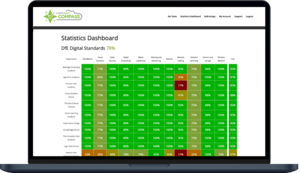
We explore how those structured termly engagements; combined with the Compass platform, support MAT leaders to turn national standards into meaningful, manageable improvement across every school.
The challenge of implementation
Most trusts now have visibility into their digital landscape. But visibility alone doesn’t create change.
What’s missing is translation. Moving from data and standards to strategy and delivery.
MAT leaders consistently tell us they struggle with:
Sequencing: In what order should improvements be tackled?
Capacity: How do we ensure smaller schools aren’t overloaded?
Consistency: How do we bring everyone to the same baseline without creating more paperwork?
Confidence: How do we know our plan aligns with the digital and technology standards?
These are strategic questions, ones that can’t be solved by software alone.

Why Compass 360 exists
Bringing strategic consultancy into the digital conversation
The digital and technology standards are valuable; but they’re not written in the order schools should tackle them. Your consultant helps you map a realistic sequence, for example:
Strengthen identity and access management before major cloud adoption
Improve network reliability before device refresh
Align procurement cycles across schools for better value-for-money
Prioritise cyber and safeguarding-related actions during high‑risk windows
Sequencing is where MATs gain the most value.
It prevents wasted investment, removes duplication and sets schools up for success.

Building trust-wide alignment without adding school workload
During each termly meeting, your consultant works with you to refine:
-
What the Trust expects
-
What each school needs to do
-
What the central team will support centrally
-
What can reasonably be deferred into future terms or years
“Computeam have worked alongside us as true strategic partners, helping us shape a clear digital vision, update our infrastructure, prioritise investment and ensure every school progresses in line with the DfE digital and technology standards. Computeam’s early and ongoing involvement in our digital strategy has put us ahead of many Trusts, strengthened our cyber security, and created a more consistent, resilient digital environment for pupils and staff.”
Emma Clark, CFO and Trust Lead for Business - Learning Academy Partnership (South West)
Preparing reports for boards, CFOs and governance
Digital strategy is now a governance-level responsibility.
Your consultant can support you to produce:
-
Progress summaries
-
Risk updates
-
Investment cases
-
Evidence of alignment with the digital and technology standards
This turns digital development from an operational issue into part of the Trust’s strategic narrative.
Why MATs value the human element of Compass 360
To put it simply: software shows you the ‘what,’ but consultancy helps you understand the ‘so what.’
Leaders tell us they value:
Expert interpretation
Not every digital standard or requirement applies equally to every school.
Impartial challenge
A consultant can ask the hard questions that internal teams may avoid.
Pacing and accountability
A termly cycle keeps momentum going; without rushing.
Confidence in decision‑making
Leaders know they’re acting on evidence, not instinct.
A partner who understands the education context
Budgets, staffing, curriculum pressures – these matter as much as technology.
This blend of insight and support is what turns an audit into an actual improvement programme.
Questions for Trust and School Leaders to Consider
As you think about the digital and technology standards and your trust’s digital strategy, consider:
Do we have a sequenced plan, or just a list of recommendations?
Are we confident that every school can realistically deliver what we’re asking of them?
Do we understand the interdependencies between our digital priorities?
Are decisions being made based on current, accurate trust-wide data?
Do we have a structured mechanism for reviewing progress each term?
If any of these feel uncertain, it may be time to look at structured support like Compass 360.

Practical next steps for MAT leaders
Here are some actionable steps you can take now:
1. Identify your trust-wide critical dependencies
For example: Can we achieve our cloud vision if our networks aren’t stable?
2. Map out existing in‑school digital leadership capacity
This helps ensure expectations are realistic.
3. Review your current digital reporting to the board
Does it demonstrate strategic control and progression?
4. Clarify your 12–36 month digital intentions
Strategy fails when vision isn’t explicit.
5. Decide whether your MAT needs external challenge or facilitation
Often, a structured conversation with an independent consultant accelerates momentum.
Next steps
Digital maturity grows when conversations, data and priorities come together
The Department for Education digital and technology standards give MATs the foundation.
Compass 360 provides the structured support, sequencing and guidance needed to turn that foundation into sustainable, trust-wide progress.
Through termly consultant meetings, MATs gain clarity, pacing and confidence – ensuring every school moves forward at the right time, in the right order, with the right support.
If you’d like to explore how Compass 360 could support your MAT’s digital journey, we'd be delighted to discuss it with you.


 Learning Locker
 Climate project
 Updating page...