
Creating a framework for digital and technology standards doesn’t mean reinventing the wheel. Most Multi-Academy Trusts (MATs) already have policies, audits and IT strategies in place, but they’re often fragmented and inconsistent. The Department for Education digital and technology standards give us a clear structure, but how do you bring everything together without starting from zero?
Why a Framework Matters
A unified framework should be viewed as a strategic asset, rather than a box-ticking compliance exercise. When every school in your trust works to the same digital and technology standards, leadership gains clarity, boards receive consistent reporting and IT teams can focus on innovation rather than firefighting.
Without alignment, compliance becomes reactive. One school might excel in cyber security while another struggles with connectivity. Such inconsistencies create blind spots that undermine safeguarding and operational resilience.

The Hidden Cost of Fragmentation
Imagine preparing for an Ofsted inspection or a funding bid. You need evidence of compliance across all schools, but the data lives in spreadsheets, shared drives and email threads. Hours are lost chasing updates, and leadership decisions are based on incomplete information.
This patchwork approach makes it impossible to answer critical questions:
→ Which schools meet the Department for Education digital and technology standards?
→ Where are the gaps, and who owns them?
→ How do we evidence compliance for Ofsted or funding bids?
Fragmentation wastes time and, crucially, increases risk. When policies and audits aren’t centralised, gaps go unnoticed until they become problems. For trust leaders, this becomes a governance challenge as much as it does an IT issue.
Examples of Digital and Technology Standards That Demand Attention
The Department for Education digital and technology standards cover 12 areas, and each one brings unique challenges. For example:
Cyber Security Standard
Trusts must ensure multi-factor authentication (MFA) is enabled for all staff accounts. Without MFA, a single compromised password could expose sensitive pupil data across multiple systems. The digital and technology standard also requires regular patching of devices, yet many schools still rely on manual updates, leaving vulnerabilities open.
Digital Accessibility Standard
Every school website and digital platform must meet WCAG 2.1 AA guidelines. This is a fundamental issue of inclusion. If a parent with a visual impairment cannot access key information, the trust risks breaching equality legislation and damaging its reputation.
These examples highlight why a fragmented approach fails. Compliance is about safeguarding, inclusion and trust-wide accountability. However, it’s also about acknowledging that one person in the school or trust cannot possibly know all the answers, so collaboration is key to improvement.

Turning Existing Work Into a Strategic Asset
Most organisations already have valuable data, policies, audits and IT strategies. The challenge is transforming that data into a structured, actionable framework. Start by reviewing what you have and mapping it against the Department for Education digital and technology standards.
This process is a matter of consolidation. By creating a single source of truth, you reduce risk, save time and build confidence with stakeholders. More importantly, you lay the groundwork for proactive improvement rather than reactive compliance.
How Computeam Compass Accelerates This Process
Computeam Compass was designed for this exact challenge. It takes the complexity of the Department for Education digital and technology standards and turns it into a practical, manageable system. Instead of juggling spreadsheets, Compass provides:
→ A central platform where existing audits and policies can be imported.
→ Automated mapping against the standards, so you instantly see where you stand.
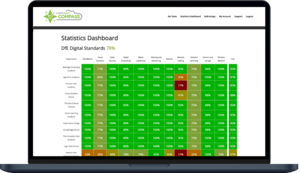
→ Dashboards that give leadership real-time visibility across every school.
Importantly, Compass helps create a culture of accountability and continuous improvement.
Why Now Is the Time
The Department for Education has made it clear: six critical standards become mandatory by 2030. That might sound distant, but the work required to achieve full compliance takes time. Trusts that act now will avoid last-minute pressure, reduce risk and position themselves as leaders in digital readiness.
Next Steps
Start by reviewing the Department for Education digital and technology standards. Then, explore how Computeam Compass can help you build a trust-wide framework without starting from scratch:


 Learning Locker
 Climate project
 Updating page...